


Key Benefits
- Delivery from 1 working day
- DFM review on every CAD file
- Brass heat-set metal inserts for durable fastening
- Single part up to 400×400×400mm
- Materials: PLA · ABS · Polycarbonate · Nylon · PETG · TPU
- Post-processing: support removal, sanding and painting
- Pan-India shipping · Hyderabad same-day collection
- DRDO registered · BDL registered · GeM listed
FDM 3D Printing Services in Hyderabad
Fused Deposition Modelling (FDM) is the most widely used 3D printing technology in Hyderabad for functional prototypes, enclosures, jigs, fixtures and production parts. At iMake, based at Hardware Park Phase 2 Hyderabad, we use industrial-grade FDM printers to produce accurate, durable parts from a wide range of thermoplastic materials — with delivery starting from the same day for small parts. Our build volume goes up to 400×400×400mm, making us suitable for large-format prototypes and functional assemblies that smaller desktop printers cannot handle.
Our FDM 3D Printing Services in Hyderabad
We offer FDM 3D printing in Hyderabad for prototyping, low-volume production, tooling aids, and display models. We work with PLA, ABS, Polycarbonate, Nylon, PETG and TPU — materials chosen based on the functional requirements of your application. Every file is reviewed by our CAD engineers for Design for Manufacturability (DFM) before printing, ensuring supports are optimised, tolerances are respected, and the part can be assembled as intended. Post-processing services including support removal, sanding, painting and installation of brass heat-set inserts are available as standard.
Benefits of FDM 3D Printing for Your Business
- Cost-effective prototyping: FDM is the lowest-cost route from CAD to physical part — ideal for verifying form, fit and function before committing to expensive tooling or CNC machining.
- Faster time to market: Parts are ready within 1–2 working days in most cases. Rush printing is available for urgent requirements — WhatsApp +91-94942-69431 to check availability.
- Design freedom: Complex internal geometries, undercuts and organic shapes that are impossible to machine can be printed without additional tooling costs.
- Scalable volume: FDM is equally effective for 1 prototype or 100 identical production parts — with consistent quality across every batch.
Durable Enclosures with Metal Inserts
Strong, stable enclosures: Our FDM parts in ABS and Polycarbonate produce robust enclosures that withstand mechanical stress, vibration and moderate heat — suitable for electronics housings, instrument cases and control panels in industrial and defence applications.
Serviceable and iterable design: Our enclosures are designed to allow PCB boards and internal components to be removed and reinstalled — making it straightforward for engineers to iterate on the design without printing a new enclosure every time.
Faster product development cycles: With brass heat-set inserts installed by our team, FDM enclosures can be assembled and reassembled repeatedly — significantly shortening development timelines compared to machined or injection-moulded alternatives.
Fully customisable geometry: Our in-house CAD team can design enclosures to your exact connector, mounting and PCB specifications — including parametric designs that are easy to update when component layouts change.


Highly Detailed Sculptures and Display Models
Fine layer resolution: FDM printing at 100–150 micron layer height produces smooth surfaces and sharp detail — suitable for display models, architectural scale models and branded showpieces.
Professional CAD software: We use Autodesk Fusion 360, AutoCAD and SolidWorks to design and prepare models — ensuring precise geometry and accurate scaling for every print.
Durable, consistent materials: High-quality ABS, PLA and PETG filaments with consistent material properties ensure that display models and sculptures maintain their finish and dimensional accuracy over time.
Tight quality control: Every part is inspected against the CAD model for dimensional accuracy before dispatch — critical for presentations, client demos and exhibition models.
Consumer Electronics and Industrial Housings
Dimensional accuracy: FDM produces parts accurate to ±0.5% — sufficient for snap-fit connections, PCB mounting bosses and connector cutouts in consumer electronics enclosures and industrial control panels.
Cost-effective versus machining: FDM enclosures cost a fraction of CNC-machined equivalents for low volumes — making it the preferred choice for pre-production, field trials and pilot batch manufacturing.
Material and colour options: We print in a range of colours and can finish surfaces by sanding and painting to match product branding requirements.
Integrated assembly: Parts can be printed with internal channels, captive nuts, living hinges and snap-fit features that reduce assembly time and component count in the final product.


Scaled Architectural Models
Accurate to scale: FDM printing at layer heights as low as 100 microns captures fine architectural details — window mullions, railings, roof profiles and facade elements — at scales from 1:20 to 1:500.
Cost-efficient production: Architectural models produced by FDM cost significantly less than hand-built equivalents and are ready in 1–3 days — ideal for client presentations, planning submissions and exhibition displays in Hyderabad.
Customisable materials and finishes: Models can be printed in white, grey or custom colours, with post-processing options including sanding and painting to achieve the presentation finish your project requires.
Collaborative design process: Our CAD team works directly from your architectural drawings or 3D files — scaling, preparing and optimising the model for print while maintaining dimensional fidelity.
FDM 3D printing specifications
| Specification | FDM 3D Printing — iMake Hyderabad |
|---|---|
| Maximum build size | 400 × 400 × 400 mm (15.7" × 15.7" × 15.7") |
| Standard lead time | 1–2 working days |
| Dimensional accuracy | ± 0.5% |
| Layer thickness | 100–300 µm |
| Infill density | 30–100% |
| Materials available | PLA · ABS · Polycarbonate · Nylon · PETG · TPU |
| Post-processing | Support removal · Sanding · Painting · Metal inserts |
FDM 3D printing in Hyderabad — materials and specifications
iMake provides 3D printing services in Hyderabad at Hardware Park Phase 2. Our large-format FDM printer handles build volumes up to 400×400×400mm — suitable for prototypes, functional parts, jigs, fixtures, and end-use components for startups, defence labs, and industrial clients across Hyderabad, Telangana and Andhra Pradesh. If you are looking for a reliable 3D printing shop near me in Hyderabad, our facility at Hardware Park Phase 2 offers same-day quotes and local collection.
We serve clients across Hyderabad including T-Hub and HYSEA startups in HITEC City and Gachibowli, electronics companies in Madhapur, defence labs at DRDL and DLRL, drone and automation companies, architecture firms in Banjara Hills and Jubilee Hills, and medical device companies in Genome Valley. Our 3D printing service in Hyderabad includes DFM review, material advisory, and post-processing — all in-house.
Materials available
| Material | Best for | Key property | Typical applications |
|---|---|---|---|
| PLA | Concept models, display parts | Easy to print, good surface finish | Figurines, logos, architectural models, presentation pieces |
| ABS | Functional prototypes, enclosures | Impact resistant, machinable, heat stable | Electronic housings, POS terminals, industrial fixtures |
| Polycarbonate (PC) | High-strength, high-temperature parts | Tough, heat resistant to 110°C — ideal for metal 3D printing replacement | Defence components, instrument cases, aerospace brackets |
| Nylon | Gears, brackets, wear parts | Flexible, fatigue resistant, self-lubricating | Drone gears, automation components, replacement parts |
| PETG | Food-safe and chemical-resistant parts | Strong, slightly flexible, moisture resistant | Lab equipment, food industry fixtures, outdoor use |
| TPU | Flexible and rubber-like parts | Compressible, abrasion resistant, soft-touch | Gaskets, grips, phone cases, vibration dampeners |
Why choose iMake for 3D printing in Hyderabad?
- 400×400×400mm build volume — one of the largest FDM capacities available from a Hyderabad MSME
- Same-day and next-day turnaround for small to medium parts — fastest 3D printing service near me in Hyderabad
- DFM review on every file before printing — catches orientation, support and tolerance issues at no extra cost
- Brass heat-set inserts installed in-house — parts arrive assembly-ready
- In-house CAD team — can model from your sketch, PDF, or 2D drawing
- Pan-India shipping | Hyderabad clients can collect same day from Hardware Park Phase 2
- Serving T-Hub startups, defence labs (DRDL, DLRL, RCI), aerospace vendors, drone companies, architecture firms and medical device startups across Hyderabad
400mm
Max build dimension — largest in Hyderabad MSME
0.1mm
Layer height — fine detail and smooth surfaces
1 day
Turnaround for small and medium parts
6
Materials — PLA, ABS, PC, Nylon, PETG, TPU
Get a quote in hours: Send your STL, STEP, or OBJ file to WhatsApp +91-94942-69431. Mention material, quantity, and any finishing requirements. Our team will respond with a price and lead time the same day.
Some of our recent FDM 3D printing work

POS Device Enclosure
Custom point-of-sale device housing produced in ABS in 2 days — with PCB-accessible lid and heat-set inserts for assembly.
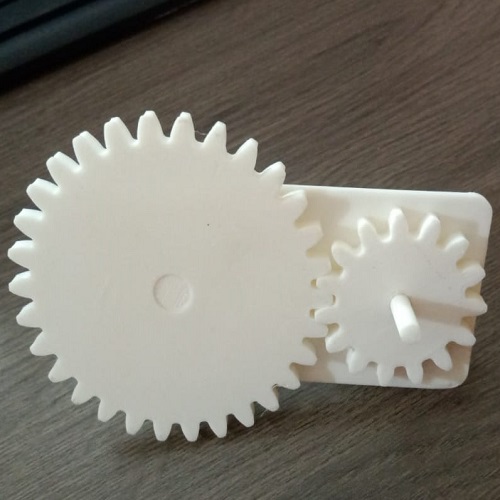
Functional Gears — Nylon
Replacement gear sets in Nylon for drones and automation systems — dimensionally accurate, wear-resistant, and available same day in Hyderabad.
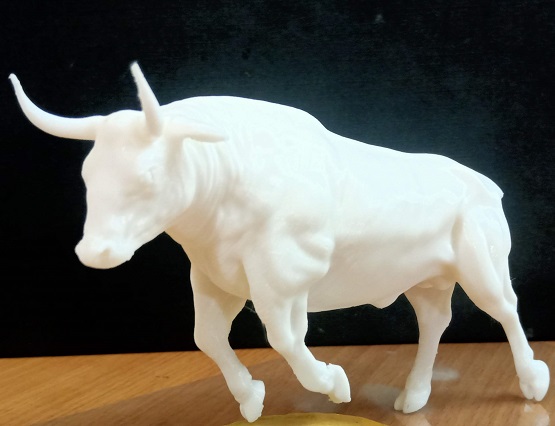
Scaled Architectural Model
Precise 1:100 scale architectural model for client presentation — produced from the architect's 3D CAD file within 48 hours.
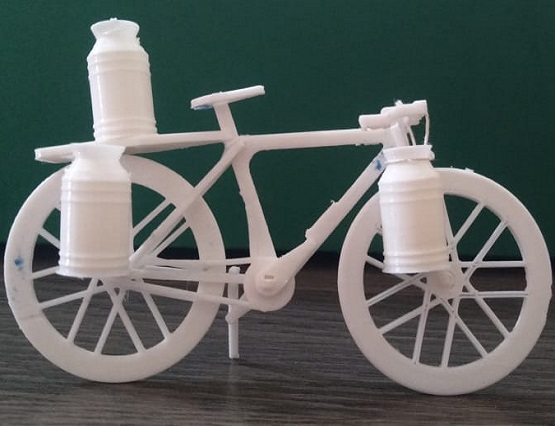
Company Logo — 3D Miniature
Corporate logo rendered as a 3D desk display in PLA — popular for office branding, awards and client gifts in Hyderabad.
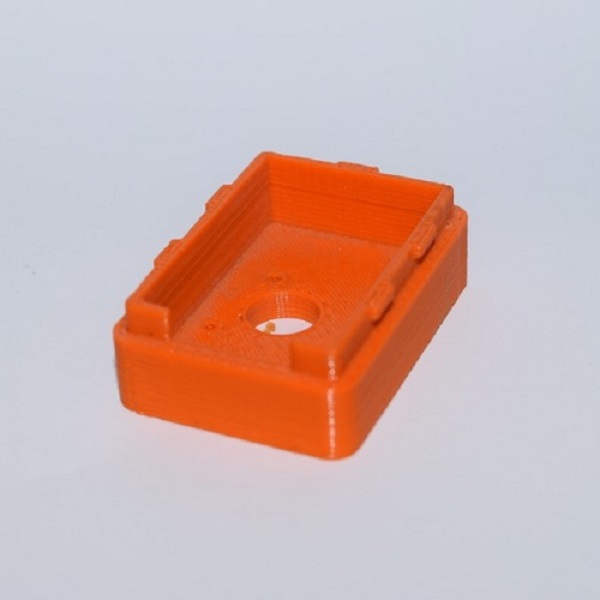
Film Props
Full-scale film and TV set props in ABS — produced from the art director's design, painted to final finish.
F.A.Q
Frequently Asked Questions
-
Where can I get FDM 3D printing done in Hyderabad?
iMake is located at Hardware Park Phase 2, Hyderabad and provides industrial-grade FDM 3D printing with same-day collection for local clients. We serve all areas of Hyderabad including HITEC City, Gachibowli, Banjara Hills, Jubilee Hills, Uppal, Secunderabad and surrounding areas. WhatsApp +91-94942-69431 for a quote or to arrange collection.
-
What materials do you use for FDM 3D printing?
We print in PLA, ABS, Polycarbonate (PC), Nylon, PETG and TPU. Material selection depends on the application — ABS and PC for functional enclosures and heat-resistant parts, Nylon for wear-resistant gears and mechanical components, PETG for food-safe or chemical-resistant applications, and TPU for flexible parts. We advise on the best material for your specific use case at no extra cost.
-
What is the maximum part size you can print?
The maximum single-part build size is 400 × 400 × 400 mm. For parts larger than this, we can split the model into sections, print them separately and bond or mechanically join them — with minimal visible seam lines. Our CAD team can advise on the best splitting strategy.
-
How long does FDM printing take in Hyderabad?
Small to medium parts (up to 200mm) are typically ready within 1 working day. Large parts or batches of multiple identical pieces take 2–3 working days. We will give you an accurate completion time as soon as we receive and review your file. Rush printing is available — WhatsApp +91-94942-69431 for an immediate slot check.
-
How much does FDM 3D printing cost in Hyderabad?
Pricing depends on material, part volume, layer height, and quantity. As a guide, small PLA parts (under 100mm) typically start from Rs.200–500. Functional ABS or PC enclosures run Rs.800–3,000 depending on size and complexity. Send your STL file to WhatsApp +91-94942-69431 and we will give you an exact quote within a few hours.
-
What post-processing services do you offer?
We offer support removal, sanding (up to 400 grit for smooth finish), painting (primer + topcoat), and brass heat-set insert installation for threaded fastening points. Parts can be delivered ready for assembly and use — no additional work required on your side.
-
Which industries do you serve with FDM printing in Hyderabad?
We serve defence (DRDO, DRDL, DLRL, RCI), aerospace, automotive, consumer electronics, medical devices (Genome Valley), industrial automation, architecture and film/TV production. We are a preferred 3D printing vendor for T-Hub startups, drone companies, and architecture firms across Hyderabad.
-
What file formats do you accept?
We accept STL, OBJ, STEP, IGES and SLDPRT. STEP is preferred for functional parts as it preserves geometry accurately. If you only have a 2D drawing or sketch, our CAD team can create the 3D file for printing — ask us about our CAD modelling service.
